
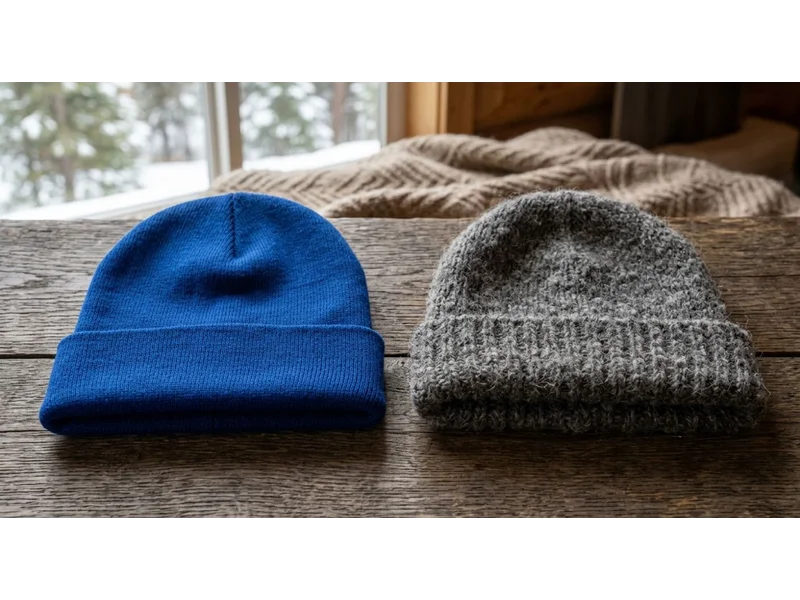
Acrylic vs Wool Beanies: Which Keeps You Warmer?
Shopping for a beanie usually comes down to one question: wool or acrylic. Both show up everywhere, from market stalls to big brand racks, and both get called “the warm one” depending on who’s selling it. But warmth isn’t about which material sounds cosier on a label. It’s about how those beanies perform once you’re actually outside in them.
The real answer changes based on a few things: how cold it actually gets where you live, how long you’re out in it, and whether you’re standing still or moving around. Once you look at it that way, picking between wool and acrylic gets a lot easier.
Is Wool Beanies Warmer Than Acrylic Beanies?
Wool comes out ahead when temperatures drop close to freezing or below. Acrylic still holds up well, just with a slightly lower ceiling before it starts losing to the cold.
Wool in real cold
Once temperatures fall toward -10°C (14°F), wool keeps insulating even if it picks up some moisture from snow or mist. That’s what makes it the go-to pick for harsh winters, long commutes, or standing outside for extended periods.
Acrylic in mild cold
In milder conditions, roughly -5°C (23°F) and above, acrylic holds its own. It won’t out-insulate wool in serious cold, but for everyday winter weather, the warmth gap is small enough that most people won’t notice a real difference.
How Each Material Holds Heat
Both materials work the same basic way: trap air close to the head to slow heat loss. The difference is in how naturally that happens.
Wool’s natural structure
Wool fibres grow with a slight crimp, or wave, built into them. That crimp creates tiny pockets of air between the fibres, which is what actually holds the heat in. It’s a built-in feature of the fibre, not something added during manufacturing.
Acrylic’s manufactured structure
Acrylic is designed to copy that same air-trapping effect, but the fibres are man-made rather than naturally crimped. It gets close to wool’s performance, usually somewhere around 70-80% as warm for the same thickness, but the density isn’t quite the same.
At the end of the day, if you’re comparing which is the most suitable fabric for a beanie hat, it comes down to matching the material to your conditions rather than picking whichever one sounds warmer.
Which One Feels Better On Your Skin
Warmth doesn’t matter much if the beanie feels annoying after ten minutes. This is where the two materials really split from each other. Wool, unless it’s a finer type like merino, can feel scratchy against the forehead or ears, which is enough to make some people take it off altogether. Acrylic tends to feel smoother right from the start, which is why it’s such a common pick for kids or anyone with sensitive skin.
Breathability works the other way around. Wool handles sweat and changing temperatures better over longer wear, while acrylic can start to feel warm and a little stuffy if you’re moving around a lot. Comfort really depends on how long you’re wearing it and what you’re doing in it.
Durability And Price Compared
Wool and acrylic age differently, and the care they need is a big part of the decision.
Care and lifespan
Wool usually needs hand-washing and flat drying to avoid shrinking, and with proper care, it can last 5 years or more. Acrylic is machine-washable, dries fast, and resists pilling, but it can stretch out of shape over time and typically lasts around 2-3 years.
Price range
- Wool beanies: usually $30-$120, with merino sitting at the higher end
- Acrylic beanies: usually $10-$50, making it the more budget-friendly option
This cost and consistency factor is exactly why brands and bulk buyers sourcing from beanie hat manufacturers often lean toward acrylic, since it holds up well at scale without driving up production costs.
Wool vs Acrylic: Quick Comparison
Here’s a quick side-by-side to make the choice easier without re-reading the whole breakdown.
| Feature | Wool | Acrylic |
| Warmth | Stronger in real cold | Solid in mild cold |
| Texture | Can feel scratchy (except merino) | Smooth, soft |
| Breathability | Better over long wear | Can feel warm indoors |
| Best use | Harsh winters, long outdoor time | Everyday wear, shorter exposure |
Custom And Novelty Beanies
If you’re after something more playful, this is where acrylic really shines. It holds bright colours well and doesn’t fade or fray as fast as wool when the design has multiple shades or patterns. That’s why most fun, character-style, or themed beanies you see are made from acrylic rather than wool.
It’s also the easier fabric to work with for personalisation, whether that’s a custom logo, a specific colour combo, or a one-off gift piece. If you’ve ever wanted to design your own cap with a bit of personality built in, acrylic gives you far more room to play with than wool does.
Picking The Right One For Your Winter
The choice really comes down to how you’ll actually use the beanies.
- Harsh cold or long hours outside: wool is the safer pick
- Daily wear, gifting, or fun designs: acrylic works just as well and costs less
- Want a bit of both: a wool-acrylic blend can balance warmth with easier care
There’s no universal winner here. It’s about matching the beanie to your winter, not chasing whichever fabric sounds more “premium.”
FAQs That Answer All Your Concerns
Is wool or acrylic better for warmth?
Wool is generally warmer, especially in serious cold. It traps air naturally and keeps insulating even if it gets a little damp. Acrylic is warm too, just better suited to milder winter days.
What material makes the warmest beanie?
Merino wool is usually the top pick. It’s soft, regulates temperature well, and keeps you warm without making your head overheat the way some other materials can.
Do acrylic beanies itch?
Not usually. Acrylic tends to feel smooth against the skin, which is why it’s a common choice for people who find wool scratchy or for kids with sensitive skin.
Can I wash a 100% acrylic beanie?
Yes, acrylic beanies are usually machine-washable and dry quickly. That’s part of why they’re considered low-maintenance compared to wool.
Is 100% acrylic good for winter?
It works well for everyday winter wear. It’s warm, lightweight, and budget-friendly, though it’s not the top choice for extreme cold or heavy moisture.
Wrapping up
At the end of the day, both fabrics do their job well, just in different conditions. Wool is the stronger pick when the cold gets serious. Acrylic holds up fine for everyday wear and gives you more room for colour and design. Think about how cold it actually gets where you are, how long you’ll be outside, and how much you care about upkeep. That’s really all it takes to pick the beanies that’ll actually keep you warm this winter.
I am the lead content creator of the CapsCompany.co.uk blog, which provides valuable insights into the craftsmanship and behind-the-scenes processes of custom headwear.My posts go deep into covering the quality of the embroidery, the cap, the branding, and the promotional merchandise. I would like to demonstrate to companies the power of custom cap design in enhancing brand awareness and establishing relationships with customers.